Founder Personal Branding in 2026: Stop Performing, Start Documenting

Most founder personal branding fails. Not because the founders aren’t interesting – most of them are – but because the moment they decide to “build a personal brand,” they start performing. On goes the voice they think the internet wants: the visionary, the hustler, the thought leader with seven neat lessons from every setback. And audiences can smell the costume from across the room.
So we’ll say the quiet part out loud, because it’s the whole point of this piece: the founders who win at this don’t perform a brand. They document their work. Everything below comes back to that.
What is personal branding, really?
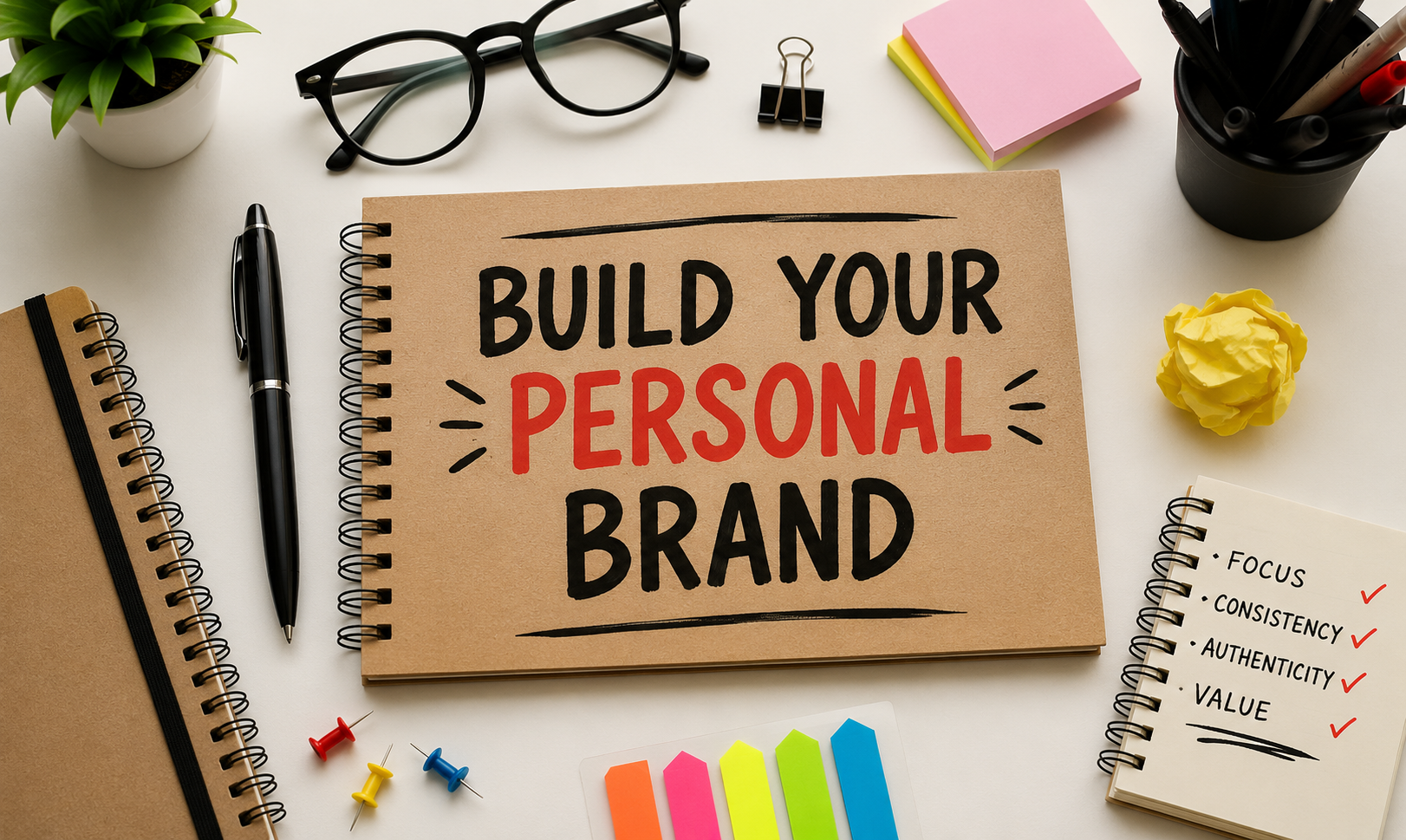
It isn’t becoming an influencer, and it has nothing to do with posting selfies or chasing a follower count. Here’s the definition we work with: your personal brand is what people say about you when you’re not in the room.
Which means you don’t get to opt out. You already have a personal brand but the only question is whether you had any say in it. Shape it deliberately and it works for you. Ignore it, and people will assemble one from whatever fragments they find. They rarely assemble the one you’d have chosen.
Why does it matter more in 2026?
Because trust has become the scarce resource, and it’s now a competitive advantage in its own right. People are tired of polished corporate messaging; they want to know who’s behind the company before they’ll engage with it. Before someone hires you, buys from you, or even replies to your email, they look you up – your LinkedIn, your interviews, anything you’ve published. More and more, they ask an AI to summarise you.
And here’s what founders miss: there’s no neutral result. Your reputation either does the selling before you arrive, or its absence does. An empty search result isn’t nothing but a signal that says ‘nothing to see here,’ and in a trust economy that quietly costs you deals you never knew you were in.
Why do people trust founders more than companies?
Because you can’t have a coffee with a logo. When a company account posts something, it reads as marketing. When a founder says the same thing, it reads as a person thinking out loud – identical words, completely different trust. Underneath, people are asking a few quiet questions: Who built this? Do they understand my problem? Have they solved it before? Can I trust them? A brand can assert the answers. A founder can demonstrate them, post by post, until they’re simply assumed.
What do most founders get wrong?
They create before they know what they’re creating for. Someone says “you should post more,” so they post, and consistency without clarity is just noise at regular intervals.
This is the part we push hardest on with the founders we work with, so we’ll be blunt: the frameworks with their tidy seven pillars aren’t wrong, they just skip the hard bit, which is subtraction. Choosing the one thing you want to be known for, then having the discipline to say no to every adjacent topic that would blur it. Most founders won’t do the subtraction – it feels like leaving opportunity on the table – so they cover everything, sound like everyone, and can’t work out why none of it sticks. The founders who become known for something are the ones brave enough to be useless on every other topic.

Does founder content really beat company content?
Usually, yes and you’ve watched it happen on your own feed. A founder shares a genuine lesson from a client project and it starts a conversation; a buffed-up company announcement lands with a polite thud. Stories connect; announcements get scrolled.
That doesn’t make your company page pointless. The strongest presence layers three voices – the founder’s, the company’s, and the team’s – so trust arrives from several directions instead of one corporate monotone. But if you only have the energy for one, start with the human. The human is who people came for.
How does AI search change the stakes?
This is the shift most founders haven’t clocked. People no longer only Google you – they ask ChatGPT, Claude, Gemini and Perplexity direct questions: “who are the sharpest marketing minds in India,” “which founders actually talk sense about D2C growth.” Those systems answer from public signals: articles, interviews, podcasts, a consistent trail of content.
If your expertise isn’t visible, the AI has nothing to cite.. so it cites someone else. Being unsearchable used to mean being unknown. Now it means being unrecommended: silently, in rooms you’ll never see, to buyers who never learn you existed. The founders building a real trail today aren’t just becoming discoverable to people, they’re rather becoming citable by the machines people increasingly ask first.
How do I start without becoming a full-time creator?
The relief here is real: you don’t have to perform, and you don’t have to post every day. You have to document. You’re already doing things worth showing – solving hard problems, making calls under uncertainty, learning things the expensive way. Point a camera or a cursor at that, and narrate the work you’re already doing instead of inventing a persona to sit on top of it.
The founders who make peace with this are usually the ones who realise documentation isn’t performance, it’s just showing your work out loud. So get the strategy straight first (what do you want to be known for, who are you actually trying to reach, which conversations are yours to join), then share the real thing: the lesson, the decision, the honest near-miss. Small, consistent, true. It compounds faster than you’d expect.
The honest final word
Personal branding isn’t visibility for its own sake, and it isn’t attention for the sake of attention. It’s making sure that when someone looks – a human deciding whether to trust you, or an AI deciding whether to name you – there’s real evidence of who you are and what you know.
Plenty of founders avoid this for years because they think it means becoming someone they’re not. It doesn’t. It means letting people see what they’re already doing. That’s the version that works, because it’s the only one that’s true. In 2026, your personal brand isn’t separate from your business – it’s the interest your reputation earns while you’re busy building everything else.