10 Trust Signals Every YMYL Website Should Have
Can an independent YMYL (Your Money or Your Life) website still grow organically? Yes. Just not with the tactics that worked a few years ago.
Google isn’t only reading your content anymore. It’s asking who wrote it, why it deserves trust, and whether it actually helps someone make a real decision. If your strategy is “publish more, target more keywords,” you’re solving the wrong problem.
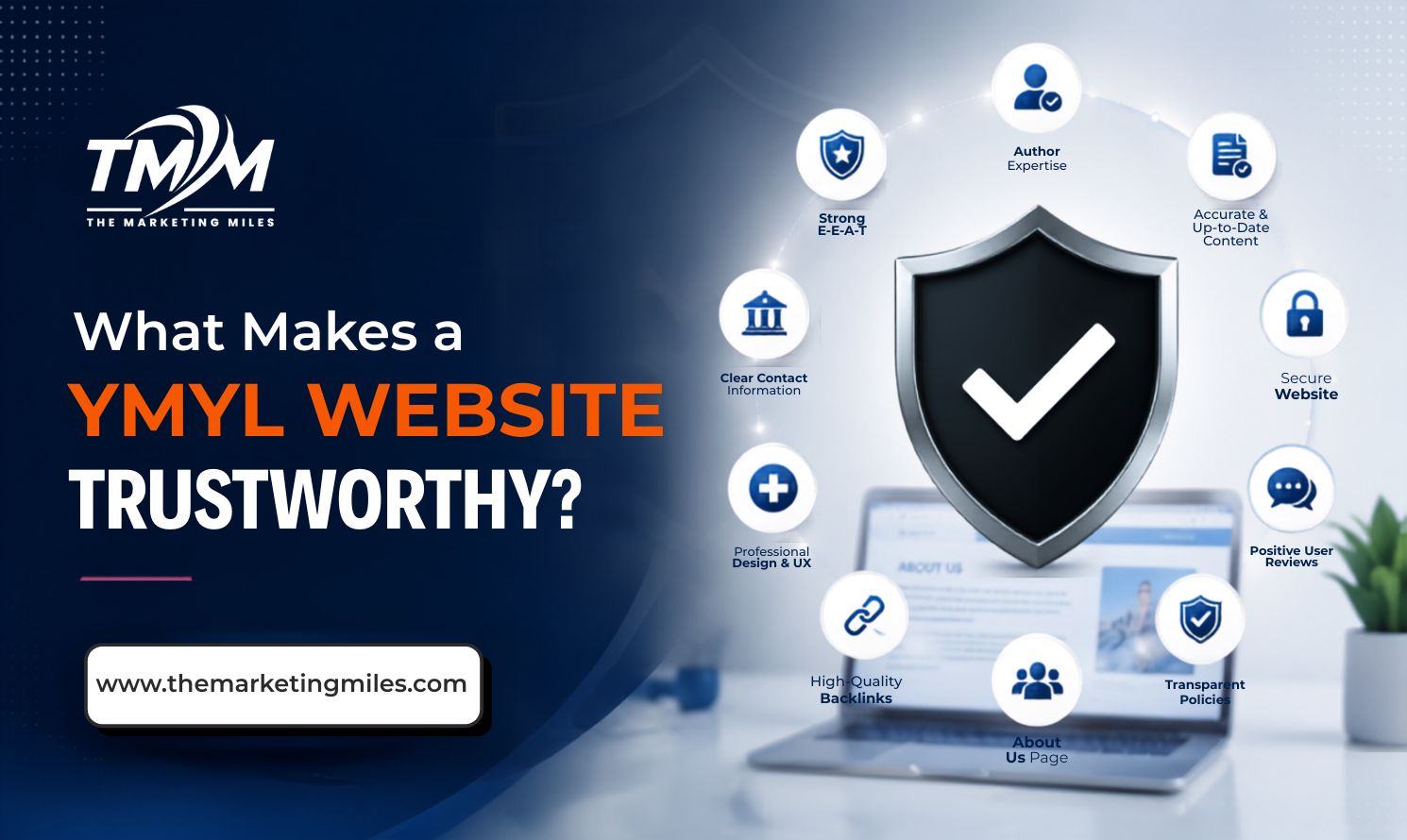
Here’s the good news: trust isn’t reserved for big brands. It’s built — with consistency, transparency, and real expertise, by any site willing to do the work. Below are 10 trust signals every YMYL website needs, why they matter, and how they add up to something durable.
A Reddit thread said it better than most case studies could. A site owner watched their YMYL traffic fall from 5,000 monthly visitors to 200 after a technical issue. They fixed the site, kept publishing — and Google still took its time coming back. The story wasn’t really about traffic. It was about trust. So that’s where we’ll start.
What Makes a Website YMYL?
YMYL — Your Money or Your Life — is Google’s label for websites that can shape someone’s health, finances, safety, or wellbeing. Healthcare, legal, finance, insurance, education, even parts of ecommerce all live here.
When the stakes are that high, Google holds the content to a higher bar. Its Search Quality Evaluator Guidelines ask reviewers to look closely at Experience, Expertise, Authoritativeness, and Trustworthiness — E-E-A-T — especially for YMYL topics. And Google has been consistent on the underlying point: helpful, people-first content is still the long game.
So before asking “Have I given Google enough reasons to trust me?” — ask the sharper question:
1.Show Who’s Behind the Content
Anonymous content doesn’t earn confidence. It just sits there.
Every important piece should name the author, show their expertise, and link to real credentials where they exist. Google has said plainly that who wrote something matters, especially on YMYL topics — and readers feel the same way, even if they never say it out loud.
If people trust the person, they’ll trust the advice.
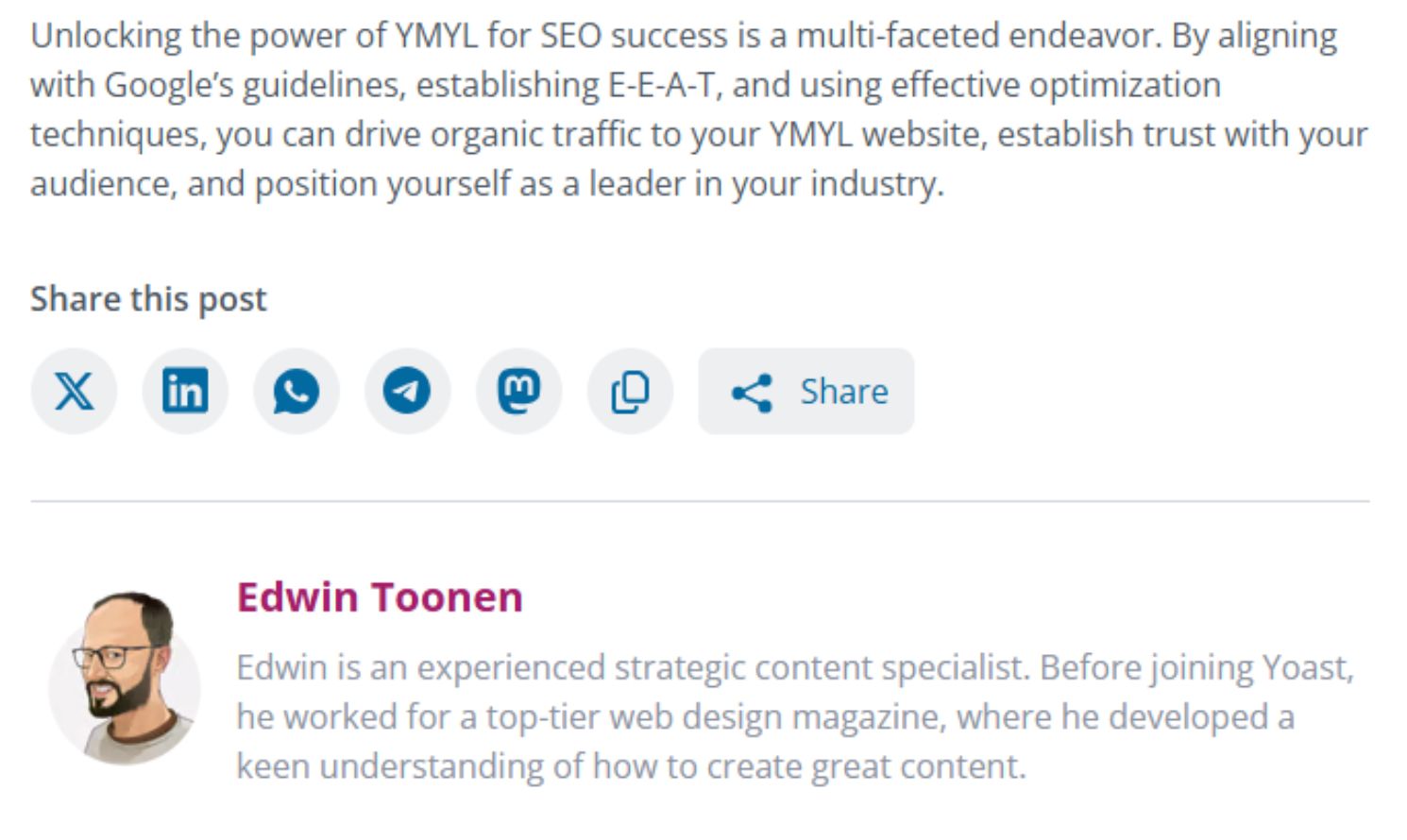
Source- https://yoast.com/
2.Back Every Claim That Matters
Strong opinions get attention. Verified facts keep it.
Any time you’re citing statistics, medical guidance, financial numbers, or legal information — point to something solid: government sources, academic research, recognized industry bodies.
This isn’t a citation checkbox for SEO. It’s how you show your work.
Good sources to lean on:
- Government sites (.gov)
- Universities (.edu)
- Peer-reviewed journals
- Official industry documentation
3.Keep It Current
Information moves. Regulations shift. Algorithms change.
What was accurate two years ago isn’t automatically accurate today. Reviewing your content on a schedule — updating numbers, refreshing screenshots, revisiting recommendations — tells readers and search engines the same thing: this is still worth trusting.
Publishing is version one. Updating is where the trust actually compounds.
4.Solve the Problem Before Chasing the Keyword
The most useful line from that Reddit thread: more articles isn’t always the answer.
Build for the problem, not the keyword count. Ask yourself one honest question:
Would someone leave this page without needing to search again?
If yes, you’re probably making the kind of content Google actually wants to surface. As Google’s own guidance puts it — write for people first, not for search engines.
5.Build a Reputation Beyond Your Website
Google doesn’t stop at your homepage. It notices where else you show up.
That includes guest articles, podcast appearances, interviews, speaking engagements, community involvement, and honest brand mentions. People should be able to find your expertise in more than one place — not just in a search result.
This is one reason why many businesses work with a Digital Marketing company that focuses on long-term authority rather than short-term rankings.
6.Make Yourself Easy to Verify
Most trust signals are invisible.
Nobody visits your Privacy Policy because they enjoy reading it.
They visit it because they’re trying to decide whether you’re real.
Every YMYL site needs the basics done right:
- About page
- Contact page
- Privacy Policy
- Terms & Conditions
- Editorial Policy, where it applies
Nobody’s Googling ‘Terms & Conditions’ at 2am. But these are the pages that quietly convince everyone else you’re not a ghost running a scam from a garage.”
7.Build Technical Trust, Too
A trustworthy site should feel trustworthy the moment someone lands on it.
That means HTTPS, fast load times, mobile-friendly design, clear navigation, and an experience that doesn’t get in its own way.
Technical SEO isn’t just a ranking lever. It’s what lets people focus on your content instead of fighting your website.
8.Chase Intent, Not Just Traffic
One more sharp point from that Reddit discussion.
A broad keyword might bring thousands of visitors. A keyword tied to real buying or decision intent might bring far fewer — and matter far more.
So instead of asking “How do I get more traffic?” — ask “Which pages are actually moving the business forward?” A good content marketing strategy is built around the right audience, not the biggest one.
9.Stay in Your Lane
Trying to cover everything usually dilutes everything.
Get known for one thing instead. Google tends to trust sites that show up consistently within a clear area of expertise — and so do readers.
Depth builds authority. Authority builds trust. Trust is what makes rankings stick.
10.Earn Recognition — Backlinks Will Follow
Backlinks still count. But real recognition counts more.
Awards, expert interviews, honest reviews, media mentions, professional collaborations — these build credibility in a way a link alone can’t.
So instead of asking “How do I get one more backlink?” — ask “What am I making that’s actually worth referencing?” That’s usually the better question, and the better strategy.
Final Thoughts
Growing an independent YMYL site was never impossible. It just asks for a different mindset than “publish more.”
The sites that keep winning aren’t always the loudest or the most prolific. They’re the ones with the strongest foundation of trust underneath them.
Start with real expertise. Cite what’s reliable. Keep it current. Build things that genuinely help. Do that consistently, and trust compounds — for readers and for Google alike.
If you’re looking for a Digital Marketing company, don’t just ask how they’ll improve your rankings. Ask how they’ll help your business become more trustworthy. Rankings often follow the brands people—and Google—already trust.